
How to Search the Summit County Court Docket
Begin with whatever court is named on your summons, ticket, or case caption. Both state trial courts in Summit County share one building. They also share one Summit County clerk operation. Even so, Summit County Court and Summit County District Court are separate dockets. Town charges travel a different municipal route. Need a Summit County hearing date soon? The free Colorado Judicial Branch daily docket is the quickest tool. A fuller Summit County case history takes CoCourts, a paid statewide electronic source. Or you can request a Register of Action and a named filing straight from the Summit County Combined Courts clerk. The official Summit court hub lays out docket search, payments, record requests, and local court services in one place.
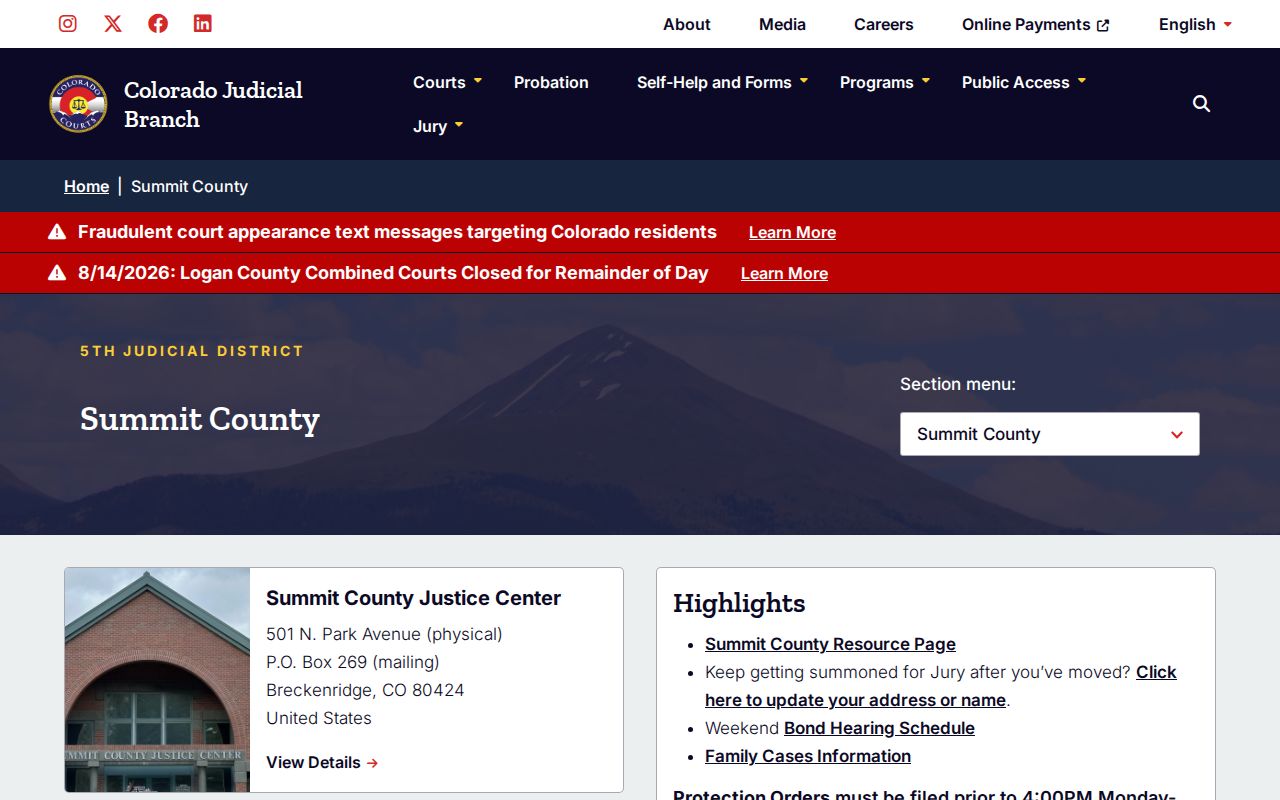
Treat that hub as a routing point. It is not one all-purpose case database, so pick the tool that matches the Summit County record you need.
- Read the document for the Summit County court name, case number, and case type.
- Use the daily docket for a date and Summit County location.
- Match the full Summit County case number and court level, not just a similar party name.
- Use CoCourts or request an ROA when one day's calendar is too narrow.
- Call or visit the correct Summit County clerk when the online result is missing, old, or restricted.
- Treat the latest signed notice or direct clerk confirmation as controlling.
Summit County Docket Search Fields
The Summit County daily docket is built around court settings. It wants a date and a Summit County location, not a full party-history query. Pick those first. A courtroom or division filter can then trim a crowded list. Results typically give the time, judicial officer, Summit County case number, caption, and event description. Columns can shift with the responsive interface. The Colorado Judicial docket search shows the current controls for Summit County settings.
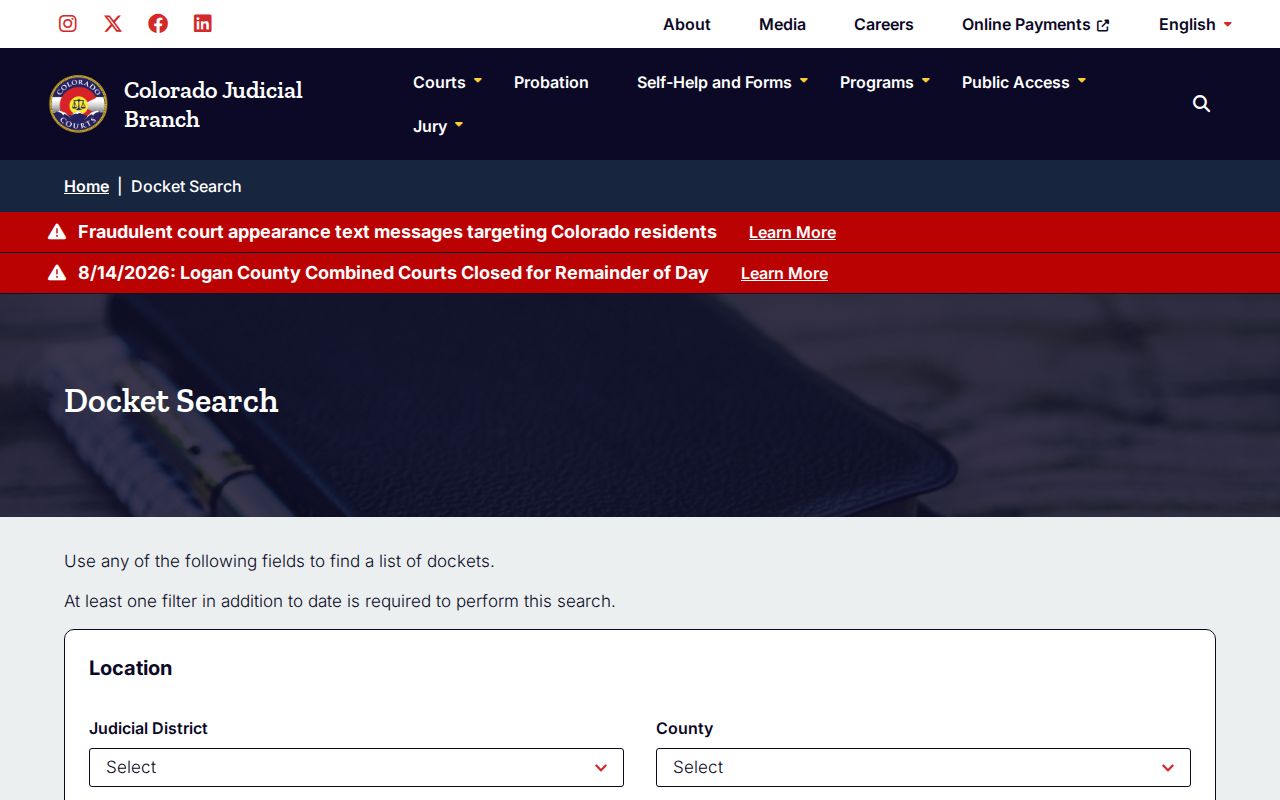
This Summit County view tells you when a matter is set and nothing more. It does not replace the full case file, and it cannot prove that no later reset exists.
| Field | Use | Summit detail |
|---|---|---|
| Date | Displays that day's Summit County list | Required for the daily calendar |
| County or location | Limits the court site | Select Summit County or the Justice Center |
| Courtroom or division | Narrows the Summit County list | Published Summit County rooms include G, O, and R |
| Previous or next date | Moves between dates | Useful when checking a changed setting |
What a Court Docket Shows
In Summit County, "docket" can mean two things. It is either the daily list of Summit County hearings or the chronological activity inside one case. The clerk calls that short case history a Register of Action, or ROA. It can list Summit County charges, sentences, minute orders, filings, and settings. Remember that a docket entry is only an index line. The filed document behind it may not be attached. A missing image does not mean the case is sealed.
Colorado's request form shows an illustrative Summit County pattern like 2023AA123456. The letters mark a case class. Copy the actual number from your papers rather than inventing a Summit County format.
| Case number | Filing year, case class, and sequence used to identify the Summit County file. |
|---|---|
| Parties | Names and roles such as plaintiff, defendant, petitioner, or respondent. |
| Entries | Summit County filed papers, minute orders, notices, and other steps in date order. |
| Settings | Past or future Summit County hearing date, time, courtroom, and event type. |
| Court | County Court, District Court, or the municipal forum holding the file. |
| Disposition | The recorded result, which must be read from the actual order when details matter. |
Summit County Docket Systems Compared
Three electronic systems do three different Summit County jobs. The daily docket is a free calendar. CoCourts, run through LexisNexis as an approved Colorado record-search vendor, offers broader statewide Summit County case data. Its terms are paid. Colorado Courts E-Filing takes papers from authorized filers and feeds them into the court system. An e-filing account does not guarantee a public user can open every image. The CoCourts search landing page illustrates the statewide record-search path for Summit County cases.
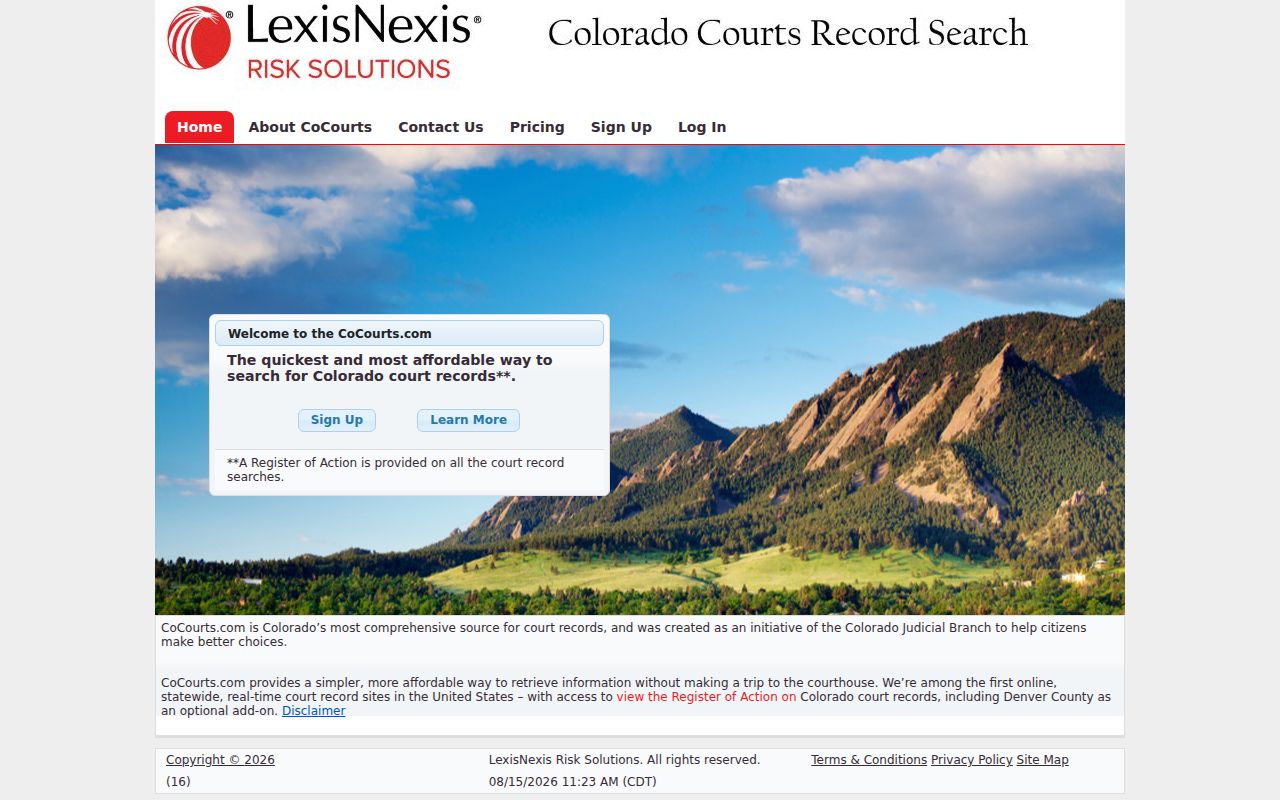
Use CoCourts as your Summit County index search. When the result lacks the ROA or the document you need, turn to the Summit County clerk request path.
| System | Best use | Key limit |
|---|---|---|
| Daily docket | Summit County dates and scheduled events | Not a full case history |
| CoCourts | Statewide electronic case data | Paid and subject to remote-access limits |
| E-Filing | Submitting court papers | Not the public docket reader |
| Clerk request | Summit County ROA, filings, and certified copies | Fees or access review may apply |
Which Courts Keep Dockets
Summit Combined Courts houses both state trial courts. Jurisdiction decides which docket holds the case. Summit County Court covers misdemeanors, traffic, small claims, protection orders, and civil cases below $25,000. It also handles early felony complaints or advisements. District Court takes felonies past that early stage. It also holds major civil suits, domestic relations, probate, juvenile, and mental-health matters. Municipal courts keep town-code and municipal-ticket records apart from the state clerk.
Federal cases arising in Summit County belong to the U.S. District Court for the District of Colorado. They do not sit in Summit County Combined Courts. Its public docket runs through PACER. Summit County bankruptcy cases go to the separate U.S. Bankruptcy Court system instead. Federal docket entries and fees differ from Summit County ROAs. Search there only when the case truly falls within federal jurisdiction. It is not a second stop for an ordinary state appeal.
| Court | Docket covers | Where to search |
|---|---|---|
| Summit County District Court | Felony, major civil, domestic, probate, juvenile, mental health | Daily docket, CoCourts, Summit County clerk |
| Summit County Court | Misdemeanor, traffic, small claims, protection orders, lower-value civil | Daily docket, CoCourts, Summit County clerk |
| Breckenridge Municipal Court | Town code and municipal offenses | Town calendar and municipal clerk |
| Frisco Municipal Court | Municipal traffic, minor criminal, animal control | Frisco court page and clerk |
| Shared municipal court | Silverthorne, Dillon, and Keystone matters | Shared court page and clerk |
Summit County Docket Jurisdiction Traps
A Breckenridge street address does not prove the case sits in Breckenridge Municipal Court. The Summit County Justice Center is also in town. So read the court caption. Frisco offers a clear test. A ticket reading "Summit County Justice Center" halfway down is a state citation, not a Frisco municipal ticket. Silverthorne, Dillon, and Keystone share one Summit County court. Even so, anyone using the vendor payment path must choose the jurisdiction printed at the top of the ticket.
A Summit County felony can also leave entries at two state levels. The complaint or advisement may start in Summit County Court. Prosecution can then move to Summit County District Court. That is normal routing. It is not a duplicate conviction. The case number and court line explain the stage. A municipal charge stays with its town clerk. Only a move or appeal shown in the official record changes that. The Summit County government site gives the local context for the county and its towns.
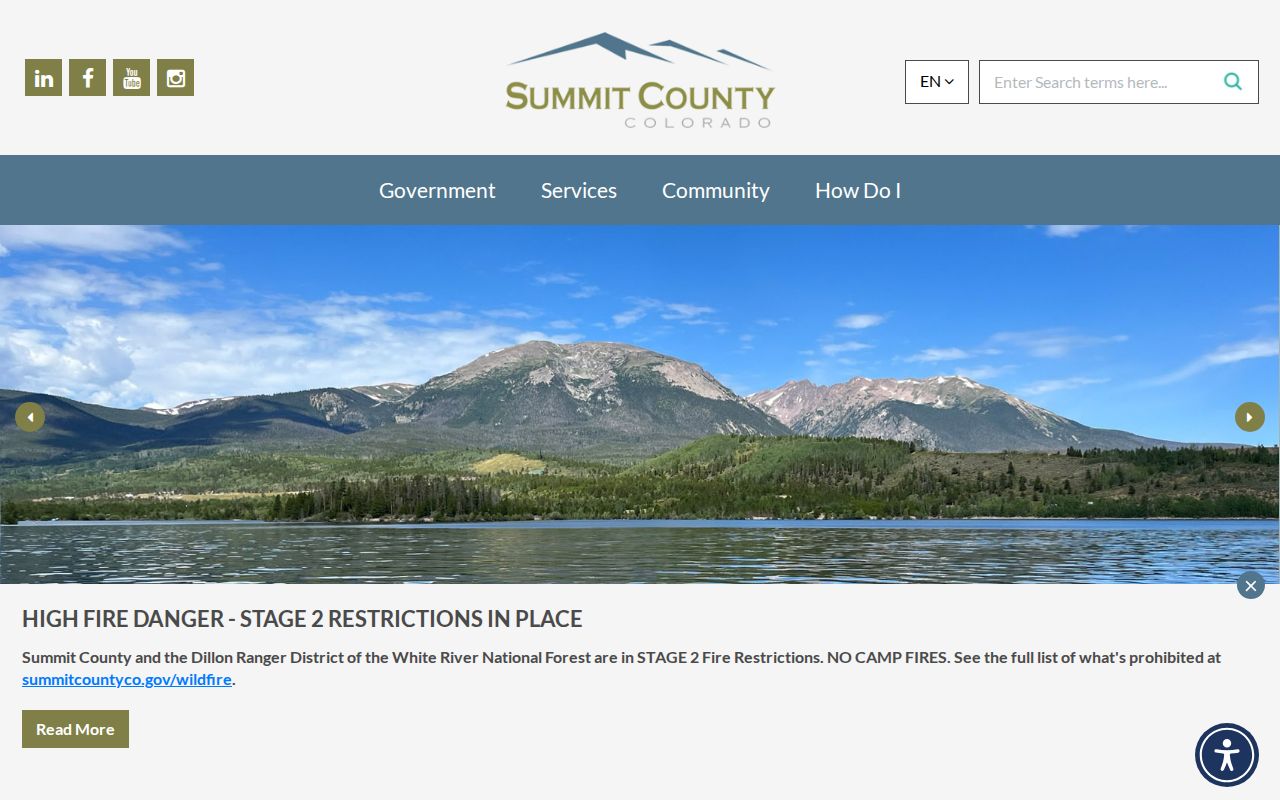
One small place can hold state, county, and municipal record paths at once.
Finding Court Dates and Settings
A Summit County hearing date can surface in several places. Check the daily docket. Try the Summit County ROA, a written notice or order, an assigned division calendar, or even a town calendar. Match the Summit County case number and event type before trusting any entry. Watch for one trap. A prior setting can linger in the case history after a continuance. The newest signed order beats a stale calendar line. So does direct confirmation from the proper clerk.
Summit County Courtrooms G, O, and R post public virtual listings. Those Summit County pages name the judicial officer and the meeting route. Watching a livestream is observation only, not an appearance. A remote Summit County appearance needs advance court approval. Skipping it can bring a warrant or other court action. For a fuller date-check routine, use the Summit County court calendar.
Summit County Virtual Docket Rooms
The published Summit County virtual-room list ties Courtroom G to Summit County Court. Courtrooms O and R serve Summit County District Court judicial officers. A room letter means little alone. Match the correct Summit County case and event first. The public list also routes Spanish interpretation. But it never grants remote-appearance permission and never replaces a written hearing notice.
The official Summit virtual courtroom list shows the rooms and connection details currently published.
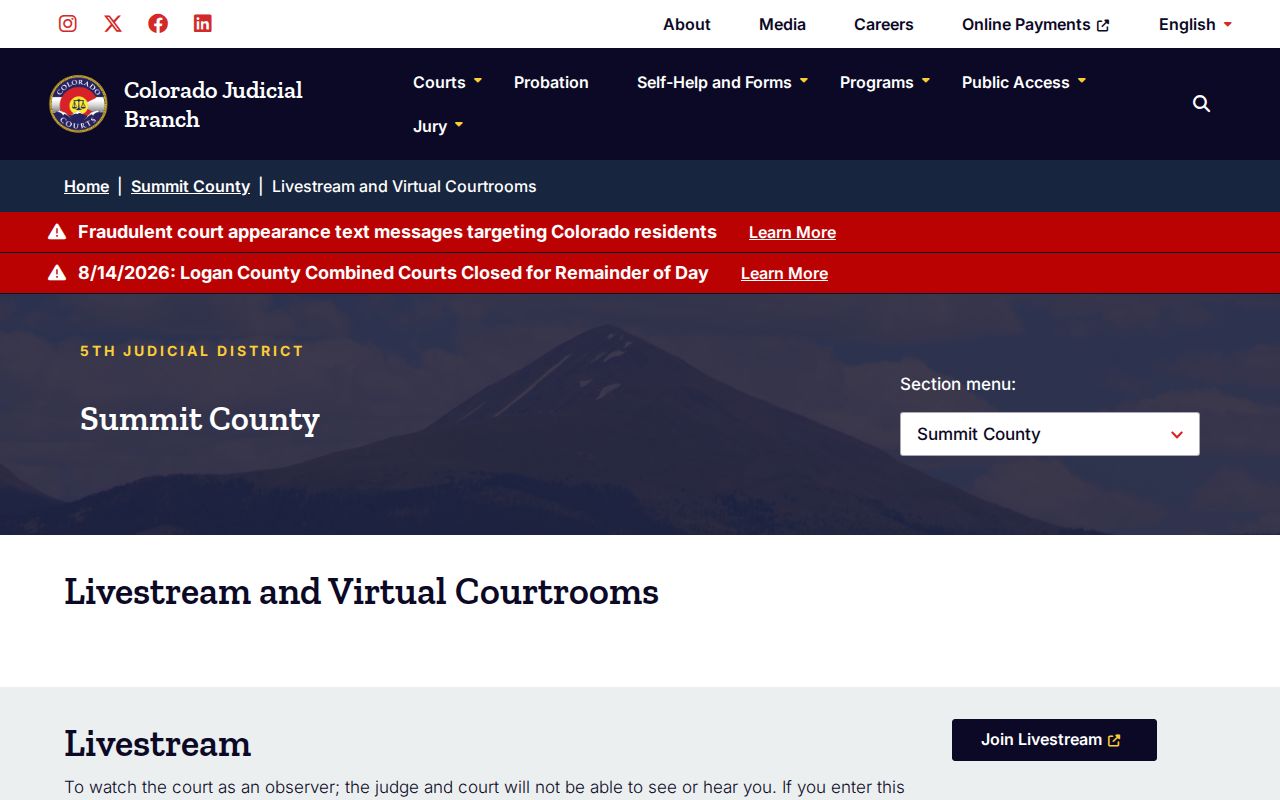
The assigned room and access instructions can change. Recheck the list near the hearing date.
- Setting
- A scheduled court event, not always the trial itself.
- Continuance
- An order moving an event to a later date.
- Reset
- A replacement setting that may leave the old entry in the ROA.
- Minute order
- A short entry recording what the court did at a proceeding.
Public Access to Dockets
Colorado sets access to court case records through Judicial Branch rules and subject-specific laws. There is no blanket open-online mandate. Nothing guarantees every field online. You may inspect ordinary public material as allowed, but remote access can be narrower. Some case types face extra gates. Juvenile, sealed, suppressed, probate, adoption, dependency, and protected-content requests may require identification. Proof of role or a court order can also be demanded. Redaction also applies. It can strip account numbers, protected addresses, minor identifiers, and sensitive health information.
Key rules:
Chief Justice Directive 05-01 sets public access and remote-access limits for Colorado court records.
Colorado Criminal Justice Records Act permits lawful custodian procedures and withholding in defined cases.
Colorado Children's Code restricts juvenile records by record type and requester status.
Chapter 38, Rule 2 governs access to Judicial Branch administrative information and records.
Summit County Docket Request Form
An online index that runs thin calls for a precise request. Know the exact product first. An ROA is the chronological case summary. A filed document is the pleading, motion, exhibit, order, or judgment behind an entry. A certified copy carries the clerk's authentication. A proceeding transcript comes through a reporter or transcriber and follows its own request route. Precise wording cuts delay and wasted research time.
The official Record/Document Request Form lays out the requester, case, document, and certification choices.
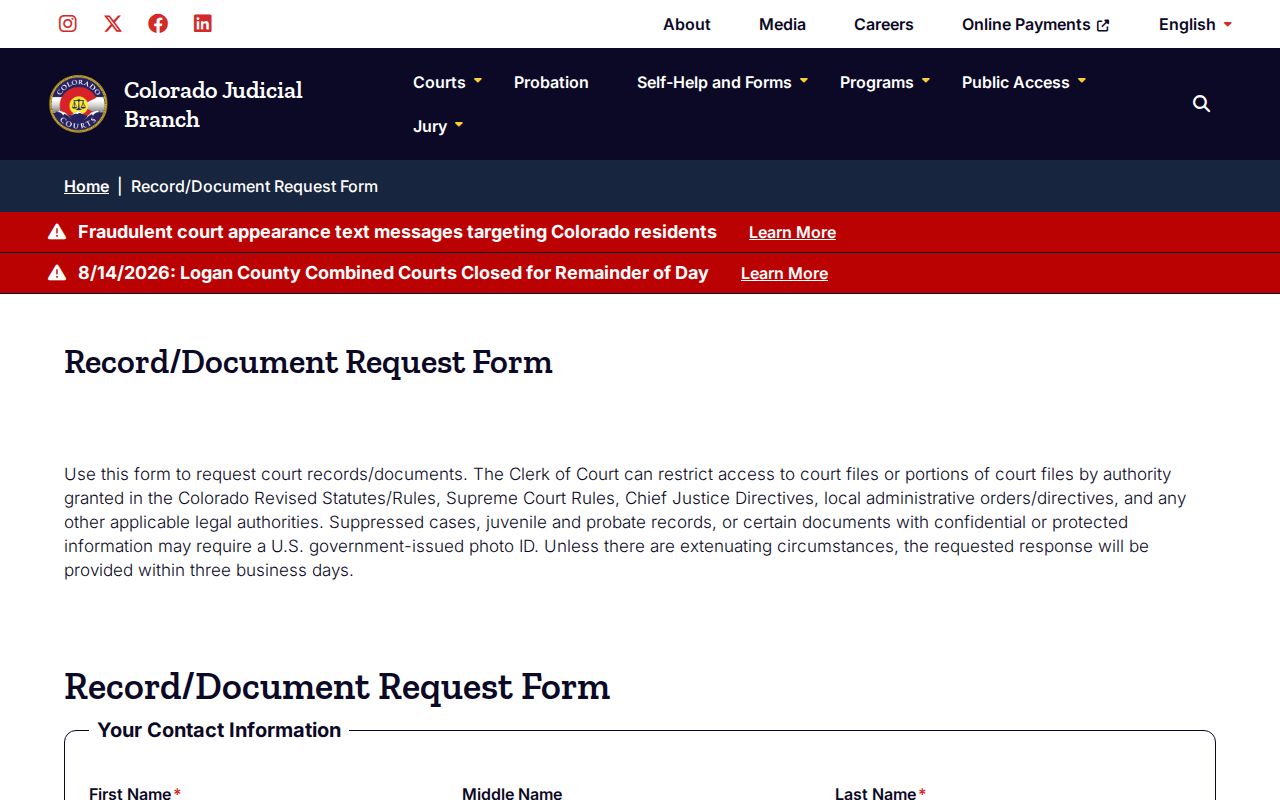
Do not prepay, the Summit clerk advises. Staff process each request, flag any access issue, and quote the amount due before payment.
Statewide fees currently include $0.25 per copied page and $20 per certified or exemplified document. A transcript of judgment costs $25. A name search without a case number costs $5. Off-site retrieval is billed at actual cost. Research and redaction cost $30 per hour in quarter-hour increments after the first hour. Note that a transcript of judgment is an enforcement document, not a word-for-word hearing transcript.
The Clerk and Docket Records
Summit Combined Courts runs on Colorado's unified Judicial Branch clerk operation. One counter holds County Court and District Court files. The case level still controls jurisdiction, though. Heidi Hershberger serves as the published Clerk of Court and an ADA coordinator. Municipal clerks stay separate. A Summit Combined Courts search cannot replace the Breckenridge, Frisco, or shared municipal record process.
Reach the clerk online through the docket and request tools. The Justice Center serves walk-ins. Phone, email, fax, and mail also work. Published office hours run weekdays from 8:00 a.m. to 5:00 p.m. The office closes from 4:00 to 5:00 p.m. on the first and third Thursday for a staff meeting. Plan around it. Call ahead before counting on public-terminal access. The official material promises no specific terminal location. Collections keeps separate counter hours. Do not confuse payment access with record inspection.
Summit Combined Courts Clerk
501 N. Park Avenue
Breckenridge, CO 80424
Mail: P.O. Box 269
970-453-2272
5thJDclerks@judicial.state.co.us
Summit County Justice Center Access
A narrow online view can miss a Summit County docket. The Justice Center is the physical fallback. Ask the clerk about reasonable inspection, an ROA, a named order, or archive retrieval. Protection-order paperwork should reach the office before 4:00 p.m. Later filings wait until the next business day. Civil returns are set at 4:00 p.m. on weekdays. Collections runs separate counter hours. Do not confuse payment access with record inspection.
The official Justice Center page displays the building, contact details, hours, and notices.
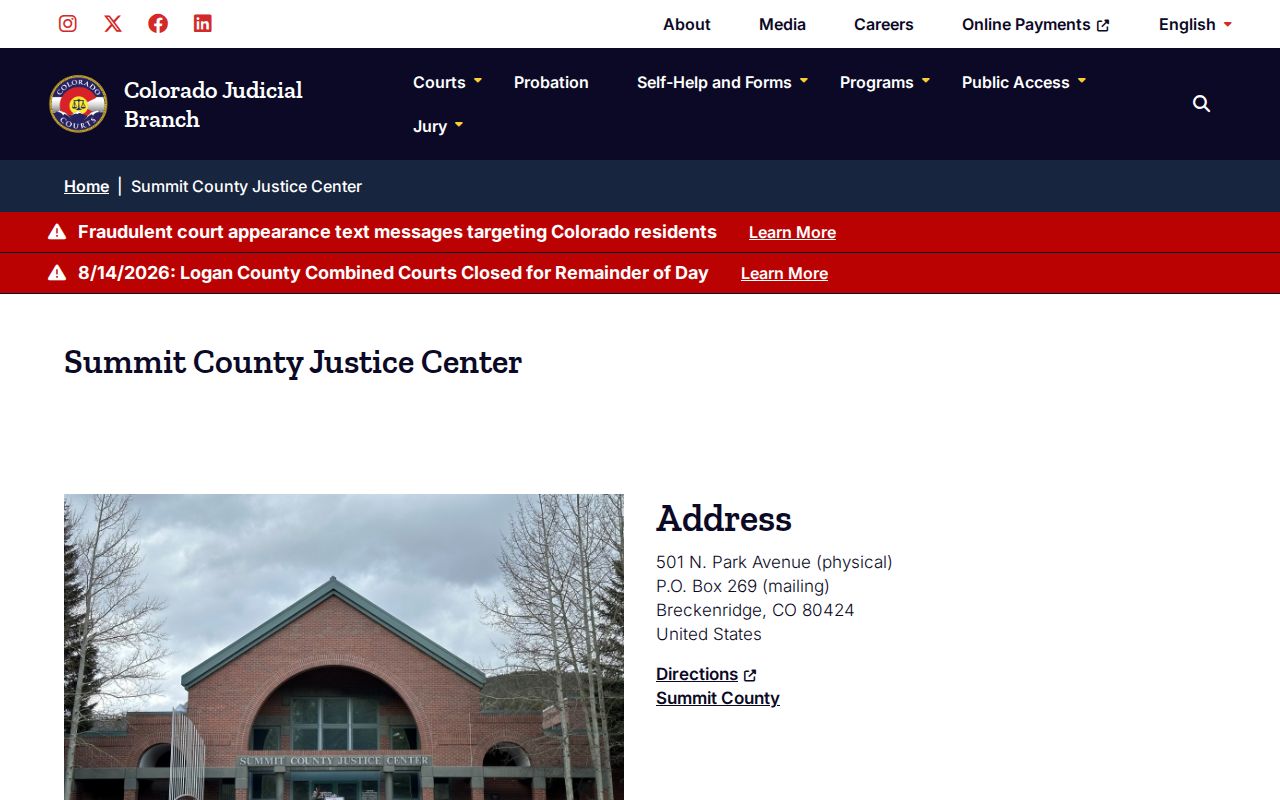
The building photo pins down the correct state-court site. Overflow parking sits in the north lot east of the District Attorney's Office, reached from Rankin Place.
Summit County Docket Technology Layers
Colorado runs several court systems side by side, each built for a different job. LexisNexis handled older filings, and those historical matters moved into Colorado Courts E-Filing. CoCourts sits apart as a public search product. Two directives govern the money side. Chief Justice Directive 08-02 lets the courts recover costs for electronic access and filing. Chief Justice Directive 05-01 has been amended recently. An older summary of either rule may lag behind the current access standard.
Here is a puzzle worth understanding. A clerk's paper file can hold a document the public portal simply won't display. Authorized filers get tools that ordinary docket searchers never see. For an old case, ask the clerk whether off-site retrieval applies. Then wait for an actual-cost quote. The state archive comes next only if the clerk confirms the file was transferred there.
Problem-solving courts can operate anywhere in Colorado's judicial districts. No official source shows a standalone public Summit County specialty-court docket, though. Start instead with the participant's underlying case number. Treatment details may stay confidential. Don't assume a program in Summit County works like one in another Fifth Judicial District county.
Summit County Docket Geography
Six incorporated towns sit inside Summit County. Yet much of the population lives outside them all. The official-hosted 2021 DOLA series counted Breckenridge at 5,000 residents, Silverthorne at 4,641, Frisco at 2,859, Dillon at 1,056, Blue River at 863, and Montezuma at 73. Those are population figures. They say nothing about court caseload. But they do help explain why a state docket and several municipal paths coexist here.
Court calendars follow their own local rhythm. Frisco generally holds municipal court on the third Wednesday at 4:30 p.m. The shared Silverthorne, Dillon, and Keystone court lists Wednesday dates. It asks for 8:00 a.m. arrival. Breckenridge's 2026 materials show sessions on the second and fourth Wednesdays. Weather, holidays, and court orders can shift a date, so confirm with the current town calendar before you go.
Court Dockets by City in Summit County
Five Summit County city pages sit below. There is one for each of the top five incorporated towns in the official-hosted 2021 DOLA series. Every card leads to that town's own court path. Some cases belong at the state Justice Center or a shared court instead. The cards flag that too. Population is context here, not a measure of filing volume.
Breckenridge Court Docket
5,000 residents in the 2021 DOLA series. The town court of record is separate from Summit Combined Courts.
Silverthorne Court Docket
4,641 residents. Silverthorne hosts the shared municipal court at Town Hall.
Frisco Court Docket
2,859 residents. Frisco keeps municipal traffic, minor criminal, and animal-control matters.
Dillon Court Docket
1,056 residents. Dillon cases use the shared court in Silverthorne.
Blue River Court Docket
863 residents. No standalone court portal was located, so the citation caption controls.
Map and Directions to the Summit County Justice Center
District Court and County Court files for Summit County are kept at the Summit County Justice Center, 501 N. Park Avenue, in Breckenridge, where a single unified clerk's counter serves both court levels. Protection-order filings should arrive before 4:00 p.m., and civil returns are set at 4:00 p.m. on weekdays, so plan an afternoon visit around those cutoffs.
Summit County Justice Center
501 N. Park Avenue
Breckenridge, CO 80424
970-453-2272
Monday through Friday, 8:00 a.m. to 5:00 p.m.
The Clerk's Office also closes early, from 4:00 to 5:00 p.m., on the first and third Thursday of each month for a staff meeting, so avoid that window if possible. Overflow parking is in the north lot east of the District Attorney's Office, reached from Rankin Place; official pages do not promise a specific public-terminal location.