
How to Search the Blue River Court Docket
The caption is your best guide for a Blue River matter. Blue River offers no standalone court-search page of its own. So read the document closely. Note the full court name, the issuing agency, the citation number, and any appearance instructions. “Summit County Justice Center” means the state system. A town ordinance case might go to a municipal forum or to the Blue River town custodian. Only the paper itself or Blue River administration can settle which. Work the Blue River evidence in this order:
- Copy the named court, issuing agency, ticket or case number, and date.
- Contact the issuing officer or agency if the Blue River forum line is unclear.
- Ask Blue River town administration who holds a Blue River town-code enforcement record.
- For a state caption, search the Colorado daily docket by date and Summit County location.
- Call Summit Combined Courts at 970-453-2272 when a Blue River state record or date remains unclear.
An empty online result does not mean the record is gone. A Blue River case may be municipal, restricted, too old for the web, or available only by direct request to the clerk.
Blue River Court Docket Has No Standalone Portal
Blue River has no standalone municipal docket, no municipal court page, and no payment portal of its own. That gap matters. It stops you from linking to the wrong court and keeps the docket search anchored to the caption. Don't pick Breckenridge, Frisco, Silverthorne, Dillon, or Keystone just because one of those systems shows up online. Neighboring portals solve nothing for a Blue River case. The citation tells you where the file really sits.
Portal rule: Blue River offers no official party-name docket or ticket-payment portal.
Bring a town-code custodian question to Blue River town administration. Turn to Summit Combined Courts only when the Blue River notice carries a state caption. An intergovernmental agreement can place a Blue River matter elsewhere, and if so the citation or the town itself should name that forum.
The Blue River Municipal Court
Blue River runs no separate municipal court of its own. Treat this heading as a routing check, not a claim that one exists. For a Blue River ordinance matter, request the record from the town's designated records contact. That holds unless the citation assigns a different municipal forum. Which forum an intergovernmental agreement actually names is not settled here. Breckenridge sits nearby, but proximity proves nothing about who hears the case. Ask Blue River administration or the issuing agency to name the court and its clerk. That answer controls the rest. It tells you where the Blue River docket, the minute order, and any certified copy are held.
Blue River Court Docket Caption Controls
Living next door to a courthouse does not give it custody of Blue River records. One stop in town can still produce different files. The charge and the issuing forum decide the outcome. State traffic cases and County Court matters go through Summit Combined Courts. A Blue River ordinance case goes wherever the town has assigned it. And a Sheriff's Office contact alone proves nothing about which court holds the case.
| Paper or caption clue | First contact | Do not assume |
|---|---|---|
| Summit County Justice Center | Summit Combined Courts | A nearby municipal clerk has the file |
| Blue River ordinance or town notice | Blue River town administration | A standalone town portal exists |
| Another municipal forum named | That named municipal clerk | Blue River keeps the court record |
| Issuing agency but unclear court | Issuing officer or agency | The agency name alone decides custody |
Copy the Blue River caption exactly before you call anyone. It saves time and keeps the docket search from landing at the wrong clerk.
Blue River Court Dates and Settings
Blue River publishes no municipal session calendar. Breckenridge sits on the second and fourth Wednesday. Frisco sits on the third. Those shared-court Wednesday schedules belong to them alone. Borrowing any of them for a Blue River matter invites error. The notice, or the forum confirmed with the clerk, must supply the date.
| Court name | The forum printed on the ticket, summons, notice, or later order. |
|---|---|
| Date and time | The current setting, subject to a later reset or signed order. |
| Location | The site named by the assigned court, not inferred from town proximity. |
| Case identifier | The ticket, citation, or court case number used to confirm the entry. |
| Setting type | Appearance, hearing, trial, compliance, or another event shown by the court. |
| Clerk | The record custodian for the named forum. |
For a state case, the Colorado daily docket or the Summit clerk can confirm a setting. For a town matter, ask Blue River directly which forum holds it.
Blue River Court Docket Town Context
Blue River is home to 863 residents. That puts it fifth among the county's incorporated towns in the official-hosted 2021 DOLA series. That number describes people, not filings. The town publishes no annual count of its court caseload. A place this size rarely runs a full municipal court portal of its own. So anyone tracing a Blue River court docket has to confirm which services the town shares or contracts out rather than assume a standalone system. The county's official hazard plan adds useful municipal background. It says nothing about where court matters are heard.
For a definitive answer on the town's boundaries and status, see the official Summit County GIS municipality inventory. It lists Blue River among the county's incorporated towns.
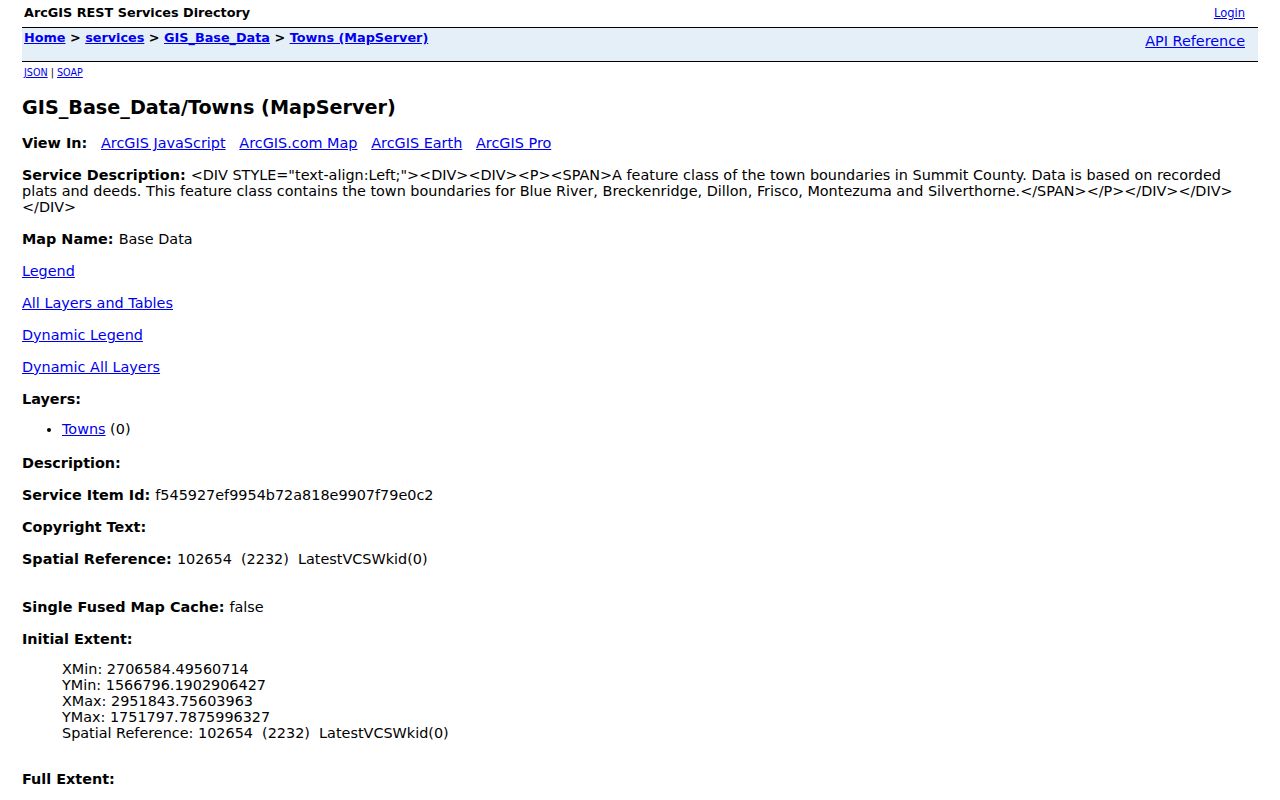
That inventory settles municipal identity and boundaries. It says nothing about courts, clerks, payment vendors, or docket assignments.
Blue River Traffic Tickets
Read the court line before you pay or fight a Blue River ticket. A state citation runs through Summit County Court. It may show up in the Colorado payment search if it qualifies. A summons can demand an appearance. A local ordinance ticket may name a municipal forum. Or it may tell you to contact the town. Blue River has no payment portal of its own. Paying can count as accepting the ticket's stated terms. So check the plea language and the deadline first. To contest it, follow the appearance instructions and reach the named clerk before the date. Don't just withhold payment or use a neighboring town's vendor. The fine, any deferred treatment, and eligibility all turn on the ticket and its assigned court. No universal Blue River schedule exists.
Blue River Court Docket Agency Split
Who wrote the ticket and who keeps the file can be two different offices. A town officer may handle a purely local matter. The Sheriff's Office or Colorado State Patrol can show up on state enforcement instead. Check the court caption printed on the citation. It tells you which clerk actually holds the case record.
- Issuing agency
- The law-enforcement or code body that issued the citation or notice.
- Forum
- The court assigned to hear the case.
- Custodian
- The clerk or records officer who holds the original record.
- Disposition
- The recorded way the charge or case ended.
Start with the issuing agency when those roles are unclear. Then confirm the docket record with the forum named on the paper.
Where Blue River Cases End Up
Blue River's state and county cases land at the Summit County Justice Center. Misdemeanors and state traffic sit with Summit County Court. So do small claims, protection orders, civil claims below $25,000, and early felony complaints. District Court takes the heavier work. That includes transferred felonies, higher-value civil cases, domestic relations, probate, juvenile, and mental-health matters.
Docket flow: Confirmed municipal forum or Blue River custodian › Summit County Court for state county-level cases › Summit County District Court for district matters
Treat this as a routing map. It is not a promise that a municipal case moves through every step. Search the court printed on the record. A state felony may progress from County Court to District Court. A town ordinance matter stays with its assigned municipal forum. A lawful appeal or transfer can change that.
Blue River Court Docket Certified Copy
A certified disposition has one true source. It is the custodian that docketed the case. Blue River administration cannot certify a state County Court file just because the incident happened in town. For state files, Summit Combined Courts supplies an ROA, named filings, and certified or exemplified copies under the applicable access and fee rules.
For a local ordinance matter, ask Blue River to name the assigned clerk or town records custodian. Then request the specific disposition or order. If the case went to another municipal court, that court's clerk is the certification source. Certification proves a record is authentic, nothing more. It does not overcome sealing or confidentiality limits.
The place of the event never controls. The clerk named by the court caption and the record assignment does.
Public Access to Blue River Court Records
Access turns on the record and its custodian. A town-code record starts with Blue River's designated custodian or the municipal court named on the citation. State case records go through Summit Combined Courts instead. Colorado law and court orders let the clerk withhold or redact protected identifiers, sealed files, juvenile matters, and confidential documents.
Key rules:
Colorado Revised Statutes Title 24 contains public and criminal-justice record provisions that authorize custodian procedures and lawful withholding.
CJD 05-01 controls public access to Colorado Judicial Branch court records, including remote limits for state cases.
A known case number does not override a sealing order or protected-record rule.
No online docket does not mean a sealed case. Ask for the named record, and state your role when access depends on authorization.
When the caption names Summit County Court or District Court, the state Record/Document Request Form can seek the ROA, a disposition or sentence order, a judgment, a satisfaction, or another described paper. The Summit clerk names the charge after processing. The form tells requesters not to prepay. A response normally arrives within three business days. Unusual circumstances can extend that wait, and an archived or redaction-heavy Blue River-related file may take longer to deliver. These state procedures set no process or price for an unconfirmed municipal forum.
Blue River Court Docket Fallback Chain
If the ticket or summons is unclear, follow a short chain: ticket caption → issuing officer or agency → Blue River town administration → Summit Combined Courts if the matter is state-captioned. Stop once the correct forum is confirmed. Do not keep moving the case to another town based only on distance.
Summit Combined Courts sits at 501 N. Park Avenue in Breckenridge. Reach the clerk at 970-453-2272. Email works too: 5thJDclerks@judicial.state.co.us. Mail goes to P.O. Box 269, Breckenridge, CO 80424. The state record request form is another channel. These options cover state County and District Court records, not every Blue River ordinance matter.
For the broader state workflow, the Summit County case search compares the daily docket, CoCourts index, payment search, and clerk request. Blue River-specific routing still starts with the actual caption.
Call before travel when a state file may be old or off site. Official sources promise no particular public-terminal location. The Summit clerk can confirm first whether retrieval, identification, or a formal document request is needed.